Why Peer Support Works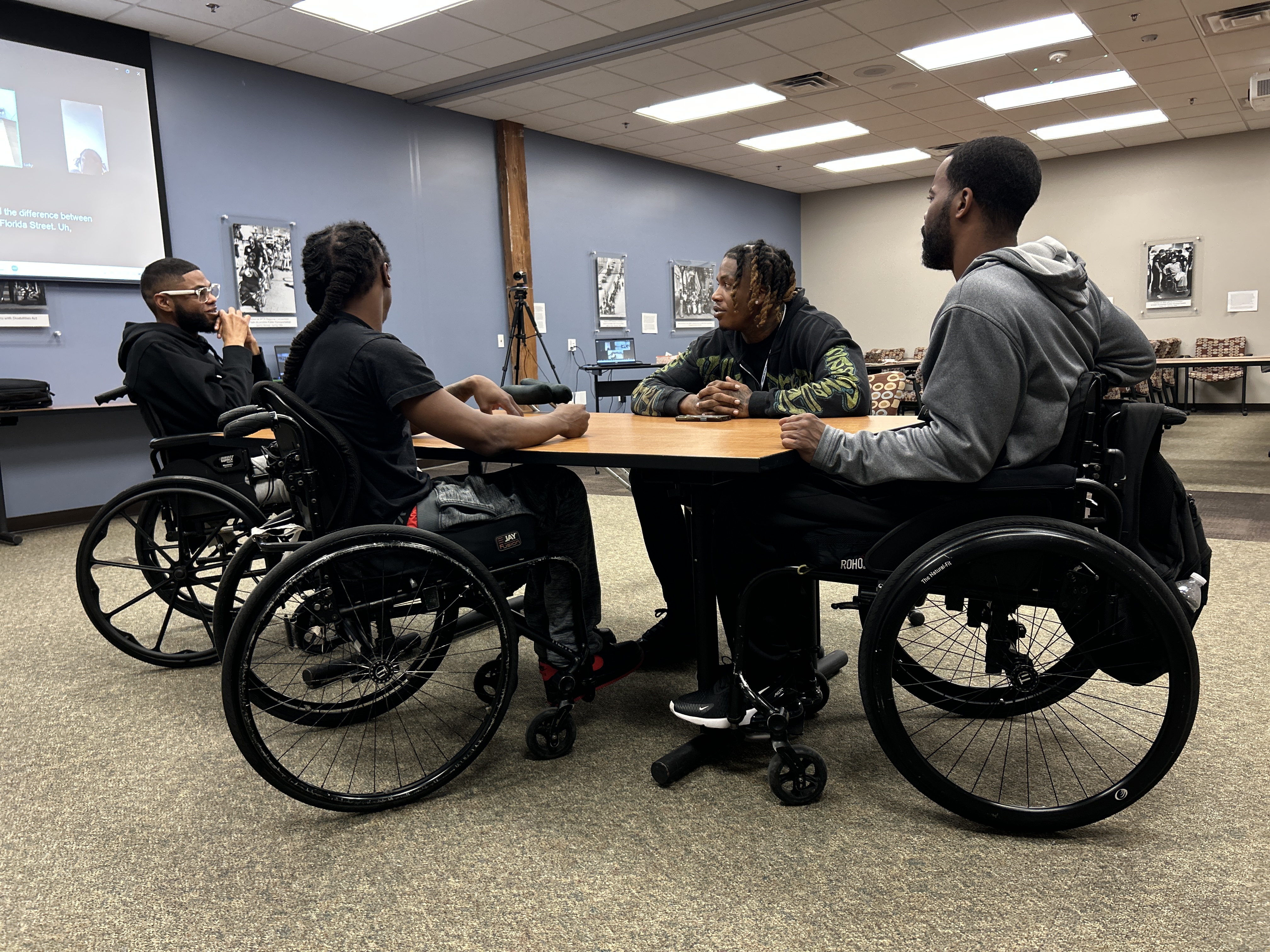
Michael is open about the fact that not all support groups work, especially early after an injury.
“When I was newly injured, I wanted to know how to get better,” he explains. “I wasn’t ready to hear that life could still be good as a wheelchair user.”
Over time, his perspective shifted. What once felt frustrating eventually revealed a deeper truth: healing isn’t only physical, and progress doesn’t always look the way we expect it to.
That realization shaped Michael’s approach to peer support.
“There’s a difference between knowing the path and walking the path,” he says. Medical professionals can explain procedures and give instructions but peers can share the real-world problem-solving that comes from lived experience.
How Tuesday Nights Began
The Tuesday night group didn’t start as an open-ended support group.
It began as a short-term personal wellness workshop in July 2025 initially planned for just four weeks. Michael promoted it through word of mouth, hospital visits, and direct, personal outreach.
“There was a thought that maybe we’d need to incentivize people with food or gift cards,” he says. “None of that was necessary.”
People came because they wanted a relaxed, judgment-free environment where they could talk honestly about problems and also solutions. But when the fourth week arrived, participants asked a simple question: Why does this have to end?
Michael’s response was just as blunt: If you keep showing up, I’ll keep showing up.
The group never stopped.
What Makes This Group Different
Many peer support groups struggle with burnout, limited funding, or over-reliance on one facilitator. Michael intentionally built a different model. Instead of one “expert,” the group operates as a collective.
Participants support one another. Over time, mentees become mentors. Problem-solving happens together, drawing from shared experience rather than authority.
This structure does something powerful: it restores a sense of usefulness.
“After an injury, a lot of people feel useless,” Michael explains. “You get that back by helping others.”
Confidence builds. Self-esteem returns. And people begin to recognize their own growth even when progress feels slow.
Talking About What’s Usually Left Out
Tuesday nights are also a place for conversations that don’t always happen elsewhere.
Transportation. Driving with hand controls. Relationships. Dating. Sex and intimacy.
“These are real concerns, especially for people injured at a young age,” Michael says. “And pretending they don’t exist doesn’t help anyone.”
Because the group is peer-led and grounded in trust, people feel comfortable asking questions they might never ask a doctor or therapist, humor and mistakes included.
“It’s not about what happens to you,” Michael says. “It’s about how you handle it.”
Who the Group Is For
While the group centers people with spinal cord injuries and mobility disabilities, it is intentionally inclusive.
Participants include:
- People newly injured and those injured years ago
- Family members and loved ones
- Partners and people dating someone with a mobility disability
What unites them is a shared understanding that nobody figures this out alone.
A Space Built on Belonging
At its core, the Tuesday night group is about togetherness.
“When you feel accepted, the sky’s the limit,” Michael says. “When you’re comfortable being your true self, that’s when real growth happens.”
That sense of belonging combined with practical knowledge and mutual accountability is what makes the group special. It’s not about fixing people. It’s about empowering them to move forward, support one another, and reclaim independence on their own terms.
Join Us on Tuesday Nights
The Spinal Cord Injury Support Group meets every Tuesday from 4:00 to 8:00 p.m. at Independence First.
Whether you’re newly injured, supporting someone you love, or looking for a peer-driven community grounded in lived experience, you are welcome.
For more information contact Michael Wolfe by phone at (414) 226-8361 or by email via mwolfe@independencefirst.org