Help Shape the Future of Independent Living in Wisconsin: Take the 2028–2030 Needs Assessment Survey
By Andrew Levinson,
Tuesday, August 11, 2026

Independent Living Council of Wisconsin logo
MILWAUKEE — What do people with disabilities need to live independently in the communities of their choosing? What barriers continue to stand in the way? And how can Wisconsin’s Independent Living network better respond to the needs of people with disabilities across our state?
Wisconsinites have an opportunity to help answer those questions through the 2028–2030 Statewide Independent Living Needs Assessment Survey.
The Independent Living Council of Wisconsin is gathering input from people across the state as part of the process of developing Wisconsin’s next State Plan for Independent Living, sometimes shortened as SPIL. The survey takes about six minutes to complete and is open to anyone who lives in Wisconsin. You do not need to have a disability to participate, although hearing directly from people with disabilities and people with lived experience is especially important.
Take the Statewide Needs Assessment Survey
Complete the survey here:
https://www.surveymonkey.com/r/F2NQXGW
We also encourage you to share the survey with family members, friends, neighbors, coworkers and others in your community. The more people who participate, and the more experiences represented, the better the statewide planning process can reflect the needs of Wisconsin's diverse communities.
What Is the State Plan for Independent Living?
The State Plan for Independent Living, called the SPIL, is a federally required plan that helps guide Independent Living services and priorities within each state.
Wisconsin's SPIL is developed through a statewide process involving the Independent Living Council of Wisconsin and Wisconsin's network of Independent Living Centers, with input from people with disabilities and other community members. The plan identifies needs and priorities for Independent Living in Wisconsin and establishes goals for strengthening services, advocacy and opportunities that support people with disabilities in living independently and participating fully in their communities.
The 2028–2030 Needs Assessment Survey is an important part of that process. Before priorities can be established, we need to understand what Wisconsinites are experiencing now.
Where are gaps in services? What barriers make it more difficult for people with disabilities to live independently? What resources are working well? What should Wisconsin's Independent Living network prioritize in the years ahead?
Your answers can help inform those decisions.
What Is Independent Living?
Independent Living is based on a simple principle: people with disabilities should have the same freedom, choice and control over their lives as people without disabilities. Full stop.
Living independently does not necessarily mean doing everything without assistance. It means having the ability to make decisions about your own life, where and how you live, how you get around, where you work, how you participate in your community and what services or supports you use. Independent Living Centers are community-based, consumer-controlled organizations that work alongside people with disabilities to help make that possible.
Services are different according to local needs, but the core services provided through the Independent Living network include: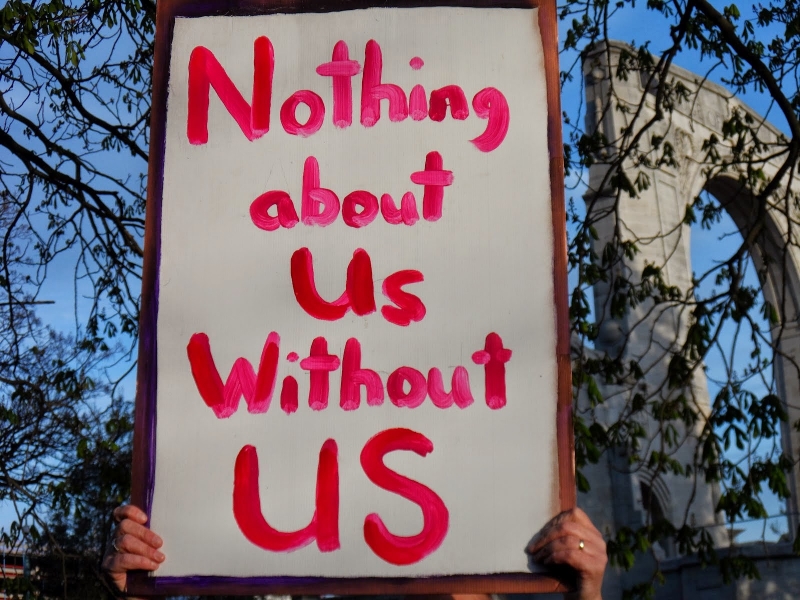
- Information and referral
- Independent living skills training
- Peer support
- Individual and systems advocacy
- Transition services, including helping people move from institutions into community-based settings and supporting youth with disabilities as they transition into adulthood
Independent Living Centers also work on broader issues affecting accessibility and disability rights. That can include transportation, housing, employment, healthcare, assistive technology, community accessibility and public policy.
A defining feature of the Independent Living model is that people with disabilities aren't simply recipients of services. They lead the movement. Independent Living Centers are consumer-controlled, meaning people with disabilities play a central role in determining how these organizations operate and what issues they address.
That philosophy is often summed up in one of the disability rights movement's best-known principles: Nothing About Us Without Us. (Right: Protest sign reads Nothing About Us Without Us)
 A Statewide Network
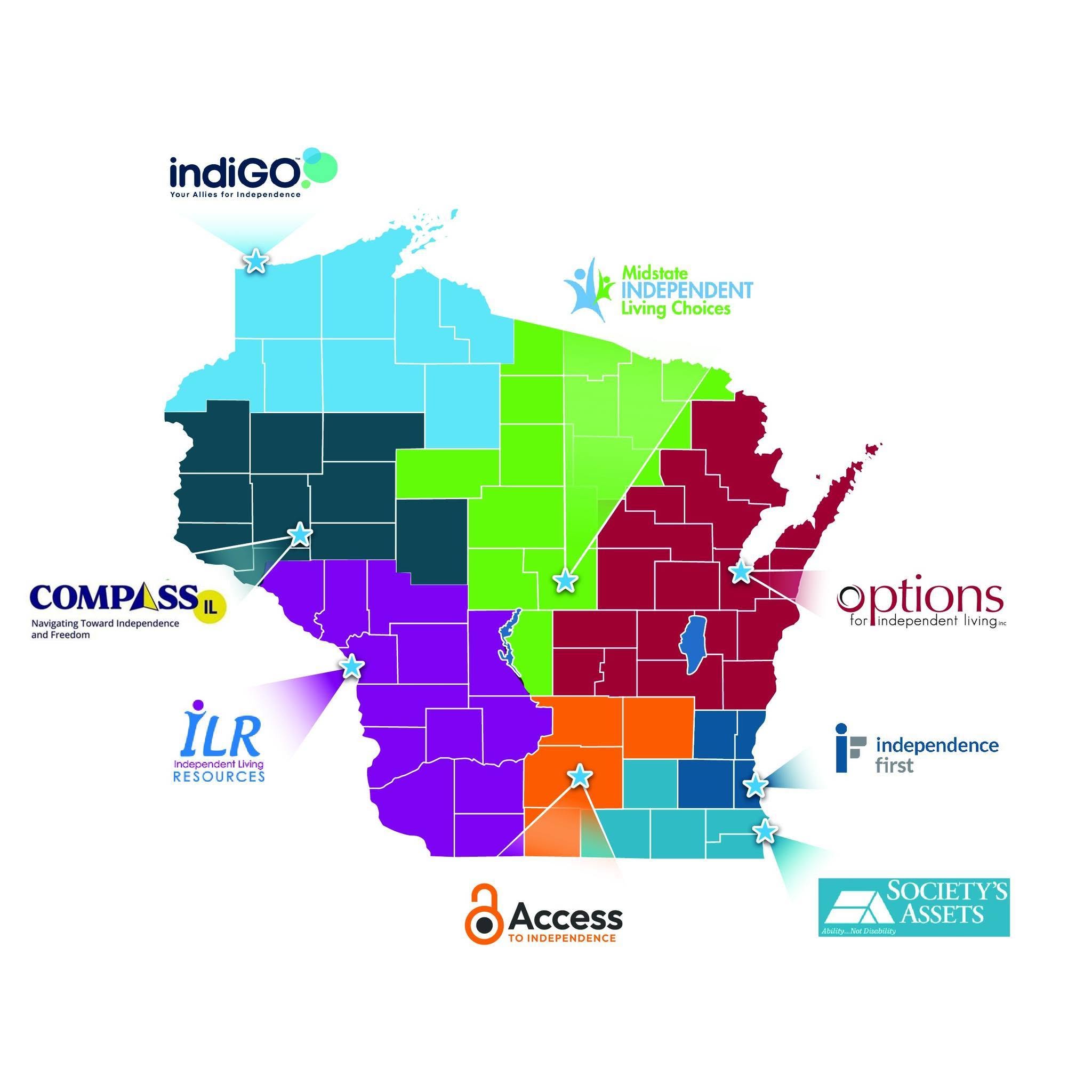
Independence First is part of a statewide network of Independent Living Centers serving communities throughout Wisconsin. (Left: map of Wisconsin showing geographic coverage area of each Independent Living Center.)
While each Center serves a particular geographic area, we share the same fundamental mission: advancing the independence, inclusion, equal opportunity and self-determination of people with disabilities.
Together, Wisconsin's Independent Living Centers form a statewide network that brings local experiences into broader conversations about the policies, services and systems affecting people with disabilities.
The Independent Living Council of Wisconsin plays a different but complementary role. The ILCW is responsible for helping develop and monitor Wisconsin's State Plan for Independent Living and for working to strengthen Independent Living across the state.
That makes public participation in the SPIL process especially important. A statewide plan should reflect the experiences of people living throughout Wisconsin, from large cities and suburbs to small towns and rural communities, and from people with many different types of disabilities, backgrounds and experiences.
Your Experience Matters
A statewide needs assessment is only as useful as the voices represented in it.
Whether you are a person with a disability, a family member, caregiver, service provider, advocate, community partner or simply a Wisconsin resident who cares about making our communities more inclusive and accessible, your perspective can help.
For people with disabilities in particular, this is an opportunity to speak directly about the barriers you encounter, the resources you need and the changes that could make it easier to live independently in your community.
The survey takes about six minutes.
Take the 2028–2030 Statewide Independent Living Needs Assessment Survey:
https://www.surveymonkey.com/r/F2NQXGW
After you complete it, please share the survey with others in your network. Reaching people with a wide range of experiences from communities throughout Wisconsin will help create a stronger picture of what Independent Living should look like in our state over the next several years.
Take the survey. Share your experience. Help make sure Wisconsin's next State Plan for Independent Living reflects the voices of the people and communities it is intended to serve.
If accessing or completing the online survey presents an accessibility barrier, alternative formats are being developed. Please contact Independence First or the Independent Living Council of Wisconsin for assistance.